


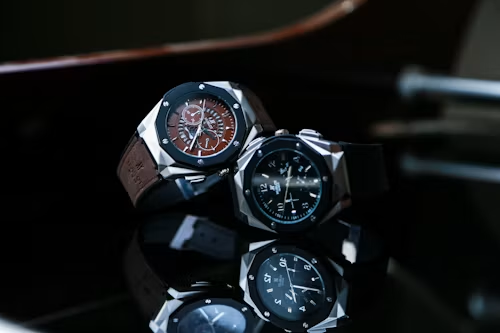
The strap has a strong effect on how a watch looks and where it can be worn. A plain leather design can make a chronograph feel more suitable for the office, while nylon or canvas can take some of the formality out of a simple dress watch. For people whose watches share the same lug width, a carefully chosen group of straps can create more combinations without requiring a large collection.
Why shared lug widths are useful
Lug width is the distance between the two inner edges of the lugs where the strap joins the case. It is measured in millimetres and is separate from case diameter. Two watches can have very different case sizes yet use straps of the same width, which is why checking the actual measurement matters more than judging by eye.
According to Watch Obsession, 20mm is the most common lug width in watchmaking and its 20mm collection is the retailer’s largest. That does not mean every watch uses it, but it explains why owners often discover that a field watch, chronograph and everyday automatic can accept the same strap width. Watches with conventional straight lugs offer the most flexibility. Integrated bracelets, shaped ends and model-specific fittings need more careful checking.
Choosing straps around the watches you already own
Start with a simple list of the watches that are genuinely worn. Note each lug width, the current strap length and the width at the buckle. A size may be printed on the underside of an existing strap, but measuring the gap between the lugs with a ruler or callipers gives a more reliable answer. A strap that is one millimetre too narrow can leave an obvious gap. One that is too wide may not fit safely or may become damaged during fitting.
If several cases measure the same, choosing a versatile 20mm watch strap creates options across more than one watch. The strap still needs to suit the case shape, spring-bar arrangement and wrist size. Curved ends and fitted designs may only work with selected models, so a shared measurement should be treated as the starting point rather than a guarantee of compatibility.
Build a small strap rotation with clear jobs
A useful rotation does not need ten versions of the same black leather design. It works better when each strap changes what a watch can do. Smooth brown or black leather covers smarter clothing and office days. A woven nylon or canvas option works with knitwear, denim and more relaxed weekends. Rubber makes sense when water resistance and active use are priorities, provided the watch itself is suitable for those conditions.
Colour also changes the character of familiar watches. Navy can pick up blue hands or dial details without appearing loud. Olive and grey sit naturally with field watches and brushed steel cases. Burgundy or tan can bring warmth to a plain silver dial. The aim is not to match every colour exactly. A strap often looks better when it relates to one element of the watch or clothing rather than copying it.
Brands carried by Watch Obsession, including Hirsch, Erika’s Originals, Morellato, RIOS1931 and its own WatchObsession range, cover different materials, finishes and constructions. Comparing those details is more useful than choosing on colour alone. Padding can suit a heavier case, while a flatter strap may sit more neatly under a shirt cuff. Contrasting stitching creates a sportier impression than tonal thread.
Quick release changes how a collection is worn
Traditional spring bars are straightforward to remove with the correct tool, but many people avoid changing straps because they are concerned about scratching the case. Quick-release spring bars use a small lever on the underside, allowing compatible straps to be fitted without a separate tool. That can turn strap changes from an occasional job into a normal part of getting dressed.
Care is still required. The spring bar should be seated properly in both lug holes before the watch is worn. A gentle check after fitting helps confirm that the strap is secure. If the case has drilled lugs, unusual fittings or little clearance around the bars, a watch repairer can handle the change quickly.
The original buckle may also matter. Some owners want to retain a signed buckle or deployment clasp from the watch manufacturer. In that case, the strap must have the correct width at the buckle end as well as at the lugs. Tapered straps can begin at 20mm and finish at a narrower size, so both measurements should be checked.
Fewer watches can still mean more choice
The strongest watch collections are not necessarily the largest. They are the ones in which each piece gets worn. Sharing straps between compatible watches can reveal combinations that were easy to overlook when each watch was treated as a fixed design.
A dressier watch may become a relaxed Friday option on textured fabric. A field watch can look cleaner on plain leather. A chronograph can move closer to its sporting roots with perforated leather or a strong woven strap. None of these changes interferes with the movement or dial that made the watch appealing in the first place.
Before buying another watch, it is worth checking what a different material, colour or construction could do for the watches already owned. One common measurement can become the link between several very different pieces, making the whole collection easier to use.
