


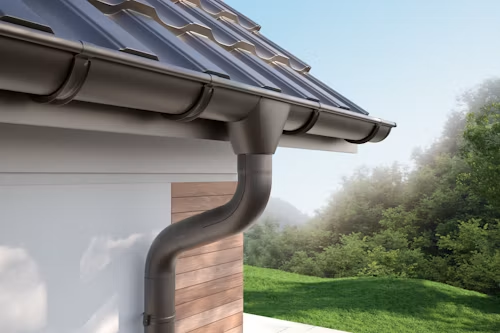
Choosing the right gutter size starts with the roof rather than the width of the gutter already fitted to the property. Roof area, pitch, rainfall and outlet position all affect how much water the system needs to carry. A gutter that cannot handle that flow may overflow during heavy rain, while specifying more capacity than the roof requires may mean choosing a larger system than the property needs.
The aim is to match the gutter, outlets and downpipes to the amount of rainwater reaching them. That applies whether you are replacing guttering on a house, a rental property or a larger residential building.
Start With the Effective Roof Area
The footprint of the building does not tell you how much roof area drains into a particular gutter. You need to consider the section of roof feeding that run and account for its pitch.
For properties in England, Approved Document H guidance on rainwater drainage uses effective roof area when assessing gutter capacity. The calculation takes roof pitch into account when determining the effective design area. A roof pitched at 45 degrees, for example, is calculated at 1.5 times the relevant plan area.
This calculation matters more when a building has several roof planes. A short gutter serving a large pitched section may need to carry more water than a longer run elsewhere on the same property.
Match the Gutter Profile to the Required Flow
Once you know the effective roof area, you can consider how much capacity the gutter needs. Different profiles provide different flow capacities, with deepflow and box systems able to carry more water than the half round option.
If the existing system is due for replacement, you can shop aluminium gutters in half round, deepflow, box and moulded ogee profiles, with different flow capacities to suit different roof drainage requirements. The choice should follow the required flow rate rather than appearance alone.
The manufacturer’s published figures, for example, give an end-outlet flow rate of 1.25 litres per second for its half round system, compared with 2.10 litres per second for deepflow and up to 3.20 litres per second for its box profile, depending on downpipe size.
Do you need the highest-capacity profile available? Not necessarily. A larger gutter can add capacity, but there is little reason to specify more than the roof and rainfall calculations require.
Allow for Rainfall at the Property
Roof area is only part of the calculation. Rainfall intensity also affects how much water the gutter needs to handle, and Approved Document H uses design rainfall intensity when calculating the discharge from a roof.
This means a specification that works for one property may not be right for another. Two similar roofs can have different drainage requirements if other parts of the calculation differ.
Roofs with valleys or several roof planes need a closer look. These features, along with areas where an overflow could allow water into the building, can affect how the rainwater system should be arranged.
Check the Outlets and Downpipes
A correctly sized gutter can still overflow if the outlets cannot clear water quickly enough. Outlet diameter, position and the number of outlets all form part of the drainage arrangement.
Gutter capacity needs to be considered alongside the outlets and rainwater pipes that carry water away from the roof. Building Regulations guidance on roof drainage explains that gutters and rainwater pipes form the above-ground part of the surface water drainage system, with Approved Document H providing the detailed requirements.
Outlet position can make a difference too. Aluminium guttering can have a different flow capacity depending on whether the outlet sits at the end or in the centre of the run. This is why gutter width should not be considered in isolation from the rest of the system.
Consider Material Alongside Size
Sizing determines whether the system can carry the calculated flow, while material affects how the guttering performs over its service life. These are separate decisions, but they make sense to consider together when an existing system is being replaced.
Marine-grade aluminium is one option when a longer service life is a priority. The manufacturer’s specification gives its aluminium guttering a functional life expectancy of 50 years under normal UK weather conditions. Periodic cleaning, debris removal and checks of joint integrity are still recommended.
Cost also needs to be considered beyond the price of the gutter itself. On taller houses, blocks of flats or buildings with difficult roof access, labour and appropriate equipment for working at height can form part of future repair or replacement work.
Bring the Specification Together
There is no single gutter size that is right for every house. Start with the effective roof area and rainfall intensity, then check that the gutter profile, outlets and downpipes can handle the expected flow.
The building itself also affects the decision. A straightforward pitched house presents a different drainage problem from a property with several roof planes, valleys or long gutter runs. Once the required capacity is clear, you can choose a material and profile that suit the property rather than relying on gutter width alone.
FAQs
What is a common gutter size for a UK house?
There is no single size that suits every UK house. Standard half round systems are available in common domestic sizes, but the required capacity depends on factors such as effective roof area, rainfall and outlet arrangement rather than the property type alone.
Does roof pitch affect gutter sizing?
Yes. Roof pitch is taken into account when calculating effective roof area, so two roofs with the same plan area may have different effective design areas depending on their pitch.
Does a larger gutter always perform better?
Not necessarily. A larger profile provides additional capacity, but the outlets and downpipes must still be able to carry the water away. The sensible choice is a system sized for the calculated flow rather than the largest profile available.
How long can aluminium guttering last?
Some marine-grade aluminium guttering systems have a stated functional life expectancy of 50 years under normal UK weather conditions. Periodic cleaning, debris removal and joint checks are still recommended.
