


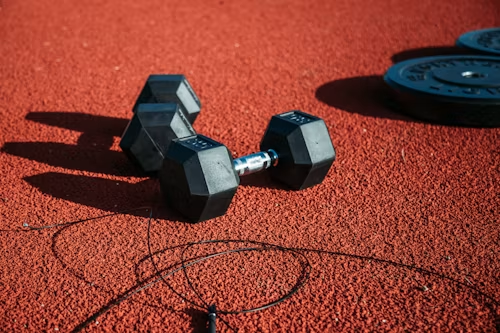
Pilates has long been celebrated for its ability to enhance core strength, flexibility, and mind-body connection. As this discipline continues to evolve, incorporating small weights into Pilates routines has become a popular method to amplify these benefits. The integration of small weights can significantly elevate the conditioning and toning effects of traditional Pilates exercises.
Enhancing Muscular Engagement
One of the primary advantages of using small weights in Pilates is the increased muscular engagement they provide. Even light dumbbells can add an element of resistance, causing the muscles to work harder. This enhanced engagement not only strengthens the targeted muscle groups but also involves stabilising muscles, thereby improving overall muscular endurance.
Boosting Core Stability
Pilates is synonymous with core strengthening, and the use of small weights can further enhance this process. By incorporating weights into exercises like the Pilates Hundred or the Roll Up, individuals are forced to engage their core muscles more significantly, promoting greater stability and control. This intensified core workout can lead to better posture and reduced risk of back injuries.
Adding Variety and Challenge
For seasoned Pilates practitioners, maintaining motivation can become challenging if routines become monotonous. Introducing small weights adds variety and difficulty, ensuring practitioners remain engaged and challenged. This variety is crucial for promoting continuous improvement and preventing plateaus in physical progress.
Promoting Muscle Definition
While Pilates primarily focuses on lengthening and strengthening, adding small weights can assist in muscle toning and definition. The resistance provided by weights helps in sculpting muscles, contributing to a more toned and defined physique. This is particularly appealing for individuals seeking both the functional and aesthetic benefits of Pilates.
Enhancing Bone Density
Weight-bearing exercises are well-regarded for their ability to improve bone density, which is essential for preventing osteoporosis. Including small weights in Pilates sessions introduces an element of weight-bearing exercise, thus supporting bone health and reducing the risk of bone density loss as one ages.
Improving Balance and Coordination
Balance and coordination are central to Pilates practice, and small weights can further challenge these skills. By adding weight, individuals need to maintain control and stability, which enhances proprioceptive abilities and promotes better balance. This heightened level of control is beneficial for athletes and individuals looking to improve their physical coordination.
Fitting into Home Workouts
Small weights are incredibly versatile and can easily be incorporated into home Pilates workouts. Their compact size ensures they are convenient and do not take up much space, making them ideal for individuals who practise Pilates at home. This practicality enhances the accessibility of effective Pilates workouts outside of studio settings.
Encouraging Mind-Body Connection
Although Pilates naturally emphasises the connection between mind and body, the use of small weights can deepen this connection. The added resistance requires greater focus and precision, encouraging practitioners to be more aware of their movements, breathing, and muscle engagement during workouts.
Supporting Rehabilitation
For individuals undergoing rehabilitation from injuries, small weights can be a gentle introduction to resistance training. They allow for a gradual increase in strength without the risk of overexertion. Pilates exercises with small weights can be tailored to suit rehabilitation needs, promoting healing while maintaining fitness levels.
Customising Workouts
The versatility of small weights means they can be used to customise Pilates workouts to suit individual goals. Whether the focus is on enhancing upper body strength or improving core stability, small weights can be integrated into specific exercises to target desired outcomes effectively.
Social and Educational Opportunities
With the rising popularity of small weights in Pilates, many studios and online platforms offer specialised classes and tutorials. These classes provide social interaction and educational opportunities, enabling practitioners to learn new techniques and connect with a community of like-minded individuals.
Motivating Consistent Practice
Incorporating small weights into Pilates routines can reignite motivation and inspire consistent practice. The added challenge and variety ensure that workouts remain fresh and exciting, encouraging practitioners to maintain regular exercise habits.
Contributing to Overall Fitness
Ultimately, the inclusion of small weights in Pilates contributes to overall physical fitness by improving muscular strength, enhancing endurance, and promoting better body mechanics. This holistic approach to fitness ensures that practitioners benefit from a well-rounded workout that supports long-term health and wellbeing.
Integrating Weights with Mindfulness
Using small weights in Pilates exercises requires mindfulness and attention to form and technique. This approach ensures that practitioners remain present and focused, reinforcing the mindfulness aspect that is central to Pilates practice. By integrating weights mindfully, individuals can maximise benefits while maintaining proper alignment.
Conclusion
In summary, the use of small weights in Pilates routines offers a multitude of benefits, enriching the traditional practice with added strength, stability, and diversity. Whether aiming for enhanced muscle tone, improved balance, or increased motivation, integrating small weights can elevate Pilates to a new level of effectiveness and enjoyment.
