


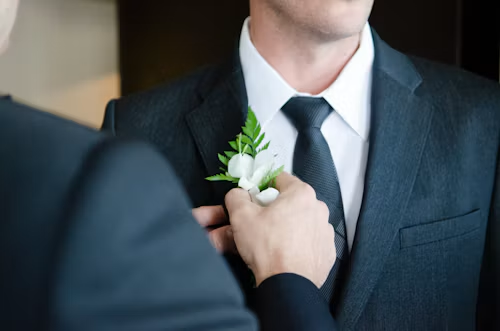
There is a contemporary fashion link too. Channing Tatum’s appearance at the 2026 Oscars included a Tiffany brooch with his Versace formalwear, as documented by Red Carpet Fashion Awards. The red carpet example shows how an ornament can sit alongside tailoring, although a family wedding calls for a different scale and budget.
The interesting question is whether that meaningful piece can take the place of a tie. Sometimes it can help create a complete open-collar outfit. Sometimes the occasion still requires neckwear. The decision depends on the suit, the dress code and the object itself, rather than a general rule that one accessory replaces another.
Start with the object and its history
Before planning the outfit around an heirloom, establish whether it is available to wear and who should make that decision. Something stored by one relative may be important to several people. Agree whether it is being borrowed, gifted or simply considered for the ceremony before arrangements become attached to it.
Check the fastening and overall condition. A clasp that has not been used for years may need attention, and a loose stone is easier to deal with before the wedding than during it. A reputable jeweller can advise on a valuable or delicate piece without you attempting a repair at home.
You should also feel free to choose another way to include the object. Wearing it is not the only option. If it is too fragile or heavy, it could appear in a detail photograph or be kept safely nearby. Its meaning does not depend on attaching it to a jacket for twelve hours.
Give the wedding suit a suitable place for it
A lapel accessory needs enough space to sit without distorting the cloth. Its size should be judged against the jacket while you are wearing it, rather than in the palm of your hand. A substantial brooch on a narrow lapel may dominate the outfit or cause the fabric to droop.
For a wedding where textured tailoring suits the invitation, Tweed suits for weddings at TruClothing offer a starting point for comparing the cloth with your heirloom. Choose the garment for fit and the occasion first. A subtle herringbone or quiet tweed can give an elaborate accessory more space than a bold check, although the result depends on both pieces. Check the specific composition and try the object against the actual jacket. A plain jacket can give an elaborate heirloom room to show. With a strong check, the same piece may become less distinct or introduce too much detail.
Ask a tailor or knowledgeable fitter about attaching a heavy item. A pin can leave a mark or strain a delicate fabric, especially if it is repeatedly removed and replaced. An existing lapel buttonhole may offer a suitable route for certain accessories, but the fastening must be compatible. Do not force an unsuitable clasp through it.
An open collar needs its own balance
Removing the tie changes the upper part of the outfit. The shirt collar becomes more visible and needs to sit tidily beneath the jacket. A soft collar that collapses or spreads awkwardly can make the result look accidental, even if the lapel ornament is carefully chosen.
Try the shirt both with and without neckwear during the fitting. Leave only the opening that feels appropriate for the occasion and comfortable on you. A wedding photograph is unlikely to improve because you copied the unbuttoned shirt of someone attending an awards party.
A waistcoat can add structure when an open collar is permitted. Its neckline changes how much shirt is visible, so judge the combination together. If the invitation requires a tie, keep it and simplify another element. The heirloom can still be part of the outfit without becoming the reason to ignore the couple’s dress code.
Discuss the buttonhole before the wedding morning
A floral buttonhole and a brooch often occupy similar space. They can work together, but size, position and fastening need thought. A heavy ornament behind a large flower arrangement may be difficult to see and awkward to attach securely.
Speak to the florist and show them a photograph of the piece against the suit. They may be able to suggest a smaller arrangement or an alternative placement that keeps the lapel tidy. The answer should be practical rather than forcing both objects into the same small area.
Other accessories should support the choice. A patterned pocket square, bright tie and elaborate brooch do not all need to compete for attention. You might keep the pocket square plain or leave it out entirely. The heirloom already gives the outfit a clear point of interest.
Plan for photographs and safe keeping
Tell the photographer if the object has a story you want recorded. A detail picture taken before the ceremony may capture it more clearly than a full-length portrait. You do not need to turn that moment into a performance. A brief explanation helps them understand why the item matters.
Keep the heirloom secure after the ceremony
Assign someone you trust to help if the piece needs to come off before dancing or travelling home. Have a suitable box ready, and agree where it will be kept. A tissue in a trouser pocket is not a reliable storage plan for something that cannot easily be replaced.
The outfit should leave you free to enjoy the wedding. If you spend the ceremony worrying that the clasp will open, the object needs a safer arrangement. Used thoughtfully, an heirloom can bring a personal detail to modern wedding tailoring. It can sit beside a tie, accompany an open collar or be recorded separately, depending on what allows both the garment and the family keepsake to be treated properly.
