



Over the last few years, workplace wellbeing has changed in a good way. Many organisations now offer better support, such as mental health days, ergonomic checks, employee assistance programmes, and menopause support. But one key area is still missing from many HR plans: menstrual health. This gap affects about 50% of the workforce who will experience menstruation and menopause during their working lives.
Supporting menstrual health is not just about being kind-it’s a smart business move. For more help and clear learning on this part of employee wellbeing, resources like https://cyclicalschool.com/ can support HR leaders and managers as this area grows.
To build a workplace that includes everyone, we need to accept and support real human needs-and that includes menstruation. When workplaces ignore this, the results can range from personal stress for employees to real costs for the organisation. This article explains why menstrual wellness matters, what stops it from being included, and simple steps HR leaders and managers can use to build a safer, more supportive workplace for all.
Why Menstrual Wellness at Work Matters
Impact of Menstrual Health on Employee Well-being
Menstruation looks different for different people, but for many it affects daily life, including work. Period pain, tiredness, and mood changes are common, and they can affect energy, focus, and long-term wellbeing. A global scoping review of workplace menstruation and menopause policies published in 2025 found that period pain and heavy bleeding affect more than 75% of menstruators at some point. That makes it a common issue, not a rare one.
When these problems are ignored, many employees deal with them quietly. This can lead to lower engagement, more time off, and longer-term mental health strain. CIPD research shows nearly 79% of people who menstruate have symptoms that can affect their work. A supportive workplace can reduce these effects and help employees do their jobs without added stress.
Business Benefits of Supporting Menstrual Wellness
Supporting menstrual health is not a “nice extra.” It can bring clear business benefits. When employees feel supported during their cycle, they can work better, stay engaged, and feel more positive about the workplace. This can lead to better retention, stronger productivity, and higher employee engagement.
Organisations that support women’s health-menstruation, motherhood, and menopause-often become more appealing to skilled candidates. When a workplace actively supports health and career growth, it can build trust and loyalty. Over time, this helps the organisation perform better and strengthens its reputation as a fair and supportive employer.
The Cost of Ignoring Menstrual Health in the Workplace
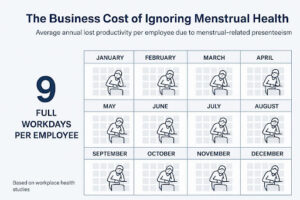
Ignoring menstrual health can cost more than many organisations realise. Presenteeism-when someone is at work but not working well because they feel unwell-is a major issue. A large Dutch study published in BMJ Open surveyed more than 32,000 menstruators and found that presenteeism linked to menstrual symptoms caused an average of 23.2 days of reduced productivity per person each year. When you account for how much performance drops, that equals almost nine full working days of lost output per menstruating employee each year.
In a company of 200 employees where half menstruate, that could mean around 900 days of reduced performance each year-yet most organisations do not measure it. Add the impact of ongoing conditions like endometriosis (affecting about 1 in 7 to 1 in 10 menstruators), which can cost tens of thousands per person each year in lost productivity. In workplaces that do not offer support, people are also more likely to cut hours, stop pushing for promotions, or leave their job, which increases hiring and training costs.
Barriers to Menstrual Wellness in Professional Settings
Why Menstruation Remains a Taboo at Work
Even with progress in workplace inclusion, many people still treat menstruation as something that should stay private. Social stigma often stops open discussion, so employees try to manage symptoms without help. This keeps the topic hidden and makes it harder for workplaces to improve.
Research shows how strong this taboo still is. A CIPD study found that 49% of menstruators never tell their manager if an absence is linked to their period. This suggests many fear embarrassment or judgment. Another survey found that 32% of men think it is unprofessional to talk about periods at work. When a normal biological process is treated like a problem topic, supportive policies and open conversations are less likely to happen.
Common Misconceptions Among Leadership and Staff
A major barrier is poor understanding and common myths among leaders and employees. Menstrual health is often seen only as a “women’s issue,” instead of a workplace wellbeing issue that affects a large part of the workforce. This narrow view can lead to menstrual health being ignored or treated as unimportant.
Symptoms can also be wrongly seen as excuses for absence or reduced performance, instead of a real and predictable part of human biology. Without basic knowledge of cyclical health, workplaces can develop bias, and employees may feel unsafe asking for support. There is often a clear gap between what HR thinks people need and what they actually need, which points to the value of better education and honest discussion.
Challenges Faced by Menstruating Employees
Alongside stigma, menstruating employees face real practical and emotional challenges at work. Pain, tiredness, and mood shifts can feel worse when the workplace does not provide basic support. A 2025 study in Queensland highlighted these struggles. Before workplaces supplied products, 94.7% of menstruating workers had experienced being at work without access to menstrual products, and this caused major mental distress.
The study also found that two-thirds of participants had leakage at work due to poor access to supplies-an upsetting and stressful situation. More than 60% said they chose clothing to hide possible stains instead of asking for help. This constant worry, along with fear of being mocked or seen as “less capable,” creates extra stress and makes it harder to focus and perform well.
Core Elements of an Effective Menstrual Health Strategy
Inclusive Policy Design
A strong menstrual health strategy starts with policies that include real support, not just one-off actions. This means combining practical resources, flexible options, and work to shift workplace culture. A helpful starting point is for HR to review current sick leave, flexible work, and wellbeing policies. Do they clearly allow for menstrual health needs? If not, small changes can make a big difference.
Menstrual leave often gets attention, especially after Spain introduced legislation in 2023. But whether it works depends heavily on workplace culture. Even if an organisation does not introduce menstrual leave, health issues like period pain should still be handled fairly and respectfully, following legal duties such as those linked to the Equality Act 2010. Policies should reduce stigma, explain how to ask for support, and help employees feel safe.
Education and Awareness Initiatives
Education and awareness are often the most important parts of a menstrual health plan. Examples from Spain and Japan show that menstrual leave policies often have low use when culture does not support open conversation. Policies alone rarely change day-to-day experiences.
Manager training matters. It does not have to be long or complicated, but it needs to happen. Training should explain basic menstrual cycle phases, common symptoms, and how managers can respond respectfully and helpfully when someone shares a need. Wider education can also help, such as sessions on nutrition, movement, and stress management linked to menstrual wellbeing. When people understand basic cyclical health, symptoms are less likely to be dismissed, conversations feel more normal, and teams work together more smoothly.
Physical and Environmental Support
Along with policies and education, physical workplace support is a key part of the plan. This is often the quickest change with a clear impact. Providing free period products in all bathrooms sends a clear message that the organisation respects employees’ basic needs.
The benefits are clear. The 2025 Queensland study found that when products were provided, workers reported better concentration, less anxiety, and improved emotional wellbeing. Alongside products, workplaces need clean and private bathrooms with proper disposal options. Small changes like quiet rest areas, or allowing extra comfort breaks, can help employees manage symptoms with dignity and less stress.
Practical Strategies for HR Leaders and Managers
How to Initiate Open Conversations About Menstrual Health
Changing the culture starts with open and honest conversations. HR leaders and managers can help by creating spaces where menstrual health can be discussed without shame. This might include regular informal check-ins, team sessions, or training where menstrual health is explained as a normal health topic, like any other part of wellbeing.
It also helps to use clear words instead of vague phrases. Using direct language makes the topic feel more normal. Set clear ways for employees to share needs, such as private conversations with HR, speaking with a manager, or using an employee assistance programme. Managers should listen carefully, take concerns seriously, and show that these issues can affect work in real ways.
Improving Access to Menstrual Products in the Workplace
One of the simplest and most useful actions is improving access to menstrual products. Free products in all workplace bathrooms are a small cost that can greatly improve comfort and dignity. It also removes stress and embarrassment when someone is caught out or runs out of supplies-something the Queensland study linked to mental distress for many workers.
Access is more than products. Bathrooms must also be clean, private, and have suitable disposal bins. Some organisations also provide “menstrual first aid” kits with pain relief and spare supplies in discreet places. These small steps can send a strong signal that the organisation understands and supports menstruating employees.
Establishing Flexible Working Arrangements
Flexible working can make a big difference during difficult days of a cycle. Options like working from home, adjusted start and finish times, or short rest breaks without heavy approval steps can reduce stress and make symptoms easier to manage without needing full sick days.
Some employers also include reproductive health in paid sick leave, including menstrual health, pregnancy discomfort, or miscarriage. Flexibility shows respect for different needs and helps people manage both physical and emotional symptoms. It can also reduce presenteeism, where employees try to work through pain and deliver less as a result.

Ensuring Privacy and Providing Rest Spaces
Privacy and rest spaces matter in a menstrual-inclusive workplace. Employees dealing with pain, heavy bleeding, endometriosis, or menopause symptoms may need a short break away from their desk. A private rest space where someone can sit or lie down, manage pain, or simply have quiet time can help them recover enough to continue working.
These areas should be clean, discreet, and easy to access. For people who deal with fatigue, poor sleep, or brain fog linked to their cycle or menopause, a safe place to reset-even briefly-can help them return to work calmer and more focused. This kind of support also shows respect for individual health needs.
Integrating Menstrual Wellness into Employee Assistance Programs
Menstrual wellness works best when it is included in existing benefits and Employee Assistance Programs (EAPs). This can include making it clear that menstrual health topics are covered, and that employees can access support from professionals who understand menstrual health issues. Easy access to informed healthcare support can help people get advice, diagnosis, and treatment sooner, especially for severe or long-term symptoms.
Organisations can also run workshops or share simple materials on topics like food, movement, and stress support that relate to menstrual wellbeing. When these resources are easy to find and are actively promoted, employees are more likely to use them and manage symptoms earlier, which can reduce the impact on work and daily life.
Leadership’s Role in Creating Menstrual-Inclusive Cultures
Modeling Empathy and Reducing Stigma
Leaders strongly shape workplace culture. Policies help, but leaders also need to show supportive behaviour in everyday actions. This can mean supporting self-care, being open about wellbeing where appropriate, and backing flexible work options for everyone, including those dealing with menstrual health issues. When leaders treat health topics with respect, employees are more likely to speak up without fear of being judged or punished in their career.
The aim is not to separate out “menstrual employees.” The aim is to build a workplace that supports real human needs, including health needs that affect about half the workforce. When leadership shows clear commitment, it builds trust and helps create a workplace where people feel valued and supported.
Training Managers on Menstrual Health Sensitivity
Leaders set the tone, but managers handle day-to-day situations. Their knowledge and approach often decide whether support works in practice. Many plans fail here, even with good intentions. That’s why manager training should be seen as necessary. It should focus on common menstrual symptoms, how to handle private conversations respectfully, and simple ways to adjust workload or deadlines when needed.
Real examples and practical guidance can help managers feel more confident. Training helps them respond calmly and respectfully, which makes employees more comfortable asking for help. When managers understand the topic, they can reduce tension around absences and help build a culture where health conversations are normal.
Evaluating Outcomes and Collecting Feedback
Menstrual wellness programmes work best when they are checked and improved over time. HR can use anonymous surveys or focus groups to gather honest feedback about policies and workplace culture. Employee feedback is key because real needs often differ from what others assume.
It also helps to track basic measures, such as absenteeism, engagement, and satisfaction scores, and look for patterns after new support is introduced. Menstrual wellness should be treated as ongoing work, not a one-time project. Keeping up with research and updating support based on feedback helps organisations keep their approach useful and relevant.
Checklist for Implementing Menstrual Wellness Programs
Assessing Current Gaps
- Review existing sick leave, flexible work, and general wellbeing policies: Do they explicitly or implicitly accommodate menstrual health needs?
- Conduct anonymous employee surveys or focus groups: Gather honest feedback on current challenges and perceived needs regarding menstrual health.
- Identify areas of silence or stigma: Pinpoint where open conversations are lacking and where employees feel uncomfortable disclosing issues.
Setting Measurable Objectives
- Define clear goals: Examples include reducing presenteeism rates, increasing employee comfort in discussing menstrual health, or improving engagement scores among menstruating employees.
- Establish baseline metrics: Use initial surveys and existing data (e.g., general sick leave) to measure impact over time.
- Set realistic timelines: Plan for phased implementation and regular reviews to track progress against objectives.
Engaging Stakeholders Across the Organization
- Secure leadership buy-in: Ensure senior management understands the business case and commits to championing the initiative.
- Involve HR and People & Culture teams: Empower them to design, implement, and manage the program.
- Train managers: Provide comprehensive education on menstrual health sensitivity and practical support strategies.
- Communicate broadly: Raise awareness among all employees, fostering a culture of understanding and support.
Review and Continuous Improvement
- Regularly review policy effectiveness: Assess whether policies are meeting their intended goals and are being utilised appropriately.
- Monitor key metrics: Continuously track absenteeism, engagement, and satisfaction data to measure ongoing impact.
- Gather ongoing feedback: Maintain channels for employees to provide feedback, ensuring the program remains responsive to evolving needs.
- Stay updated with research and trends: Adapt practices based on new insights in menstrual health and workplace wellbeing.
Resources for HR Leaders and Managers
Training Materials and Toolkits
HR leaders and managers who want to learn more now have more resources than before. Organisations like 3mbrace Health (formerly Mamamoon) provide practical training for people shaping workplace culture and wellbeing. These sessions explain how women’s health-menstruation, motherhood, and menopause-can affect absence, reduced performance at work, and staff retention.
Training often covers why sick leave among women is rising, what support helps in real workplaces, and examples of policies that already work in leading organisations. Platforms like Optima Health also offer webinars on female health topics, including menstruation, which can be an easy way to educate teams. These resources can help managers support women across different life stages.
Partnerships with Menstrual Health Organizations
Working with menstrual health charities and specialist organisations can add real expertise. Charities like Bloody Good Period, whose Chief Executive Rachel Grocott notes that “women, trans and non-binary people who menstruate are simply not being accommodated or even thought about at work,” offer both advocacy and practical guidance. Partnerships like these can help organisations build support that matches real needs.
Some partnerships may also include organisations focused on fertility awareness and cyclical health education, helping both employees and managers learn. With specialist input, workplace actions are more likely to be based on evidence, respectful of different experiences, and aligned with good practice.
Expert Consultation and Educational Providers
Menstrual health education at work is still a newer area, but it is growing fast. Expert consultants and educators can help HR teams move past basic “tick-box” work. Educators and coaches, such as Jema Lee who writes for Cyclical School, are increasingly working with HR teams to deliver practical, evidence-based learning. Topics can include cycle tracking and hormone health, explained in a work-friendly way.
Expert sessions, training, and online support can improve wellbeing, reduce absence, and help create workplaces where women can succeed at every life stage. Paying for expert support also helps make sure information is accurate, clear, and shared in a way that connects with the whole workplace, not only those who menstruate. This wider approach helps policies work in real life, not just on paper.
Frequently Asked Questions About Menstrual Wellness at Work
Should Menstrual Leave Be Standard Policy?
Whether menstrual leave should be standard is not a simple yes or no. Spain introduced paid leave for incapacitating periods in 2023, but early data showed low use: fewer than 1,600 claims across the country in 11 months. Researchers linked this to needing a doctor’s note, ongoing stigma, and worry that taking leave would make someone look less capable.
Japan has had menstrual leave since 1947, but fewer than 1% of eligible workers use it. South Korea reports similarly low use. The main message from these examples is clear: leave policies on their own do not change much if workplace culture stays the same. Flexible leave options can help, but menstrual leave is unlikely to work well without real trust, education, and a safe culture.
What Data Exists on Menstrual Health Workplace Initiatives?
Long-term data on specific workplace menstrual health actions is still building, but some studies already show clear patterns. CIPD research found that 67% of employers offer no menstrual health support, showing a large gap in current wellbeing support.
The Dutch BMJ Open study found menstrual symptoms led to an average of 23.2 days of reduced productivity per person per year. The 2025 Queensland study showed that providing free products led to better concentration, less anxiety, and improved emotional wellbeing. It also found that 94.7% of menstruating workers felt mental distress when they did not have access to products at work. Together, these findings show both the scale of the issue and the value of practical support.
How Can Male Managers Best Support Menstrual Wellness?
Male managers can have a big impact on whether employees feel safe and supported. The best starting point is education. Learning the basics of the menstrual cycle and common symptoms helps managers treat the topic as normal health information, not an awkward subject. This reduces the chance that symptoms are dismissed or misunderstood.
Education needs to be paired with respectful behaviour. Male managers can help by being approachable, listening without judgment, and supporting flexible working and access to products without making it a “big deal.” This helps create a team culture where health conversations feel normal, reducing stress around absences and supporting a more respectful and productive workplace.
Conclusion
As workplaces keep changing through hybrid work, stronger mental health support, and better neurodiversity inclusion, menstrual health is a clear next step for HR leaders. It means moving away from the old idea that people must “get on with it” quietly, and instead recognising that supporting a normal biological reality for about half the workforce is both the right thing to do and good for business. Organisations that support menstrual wellness build a stronger, more engaged, and more resilient workforce.
Building a menstrual-inclusive workplace takes ongoing effort through better policies, education, and practical support. By investing in fertility awareness and cyclical health education, companies help employees speak about their needs without fear of judgment or career harm. Organisations that act early can see real benefits in engagement, retention, and work quality, while also helping set a higher standard for modern workplace management. Supporting menstrual health goes beyond policies-it helps create a kinder, more productive, and more forward-looking workplace for everyone.
