


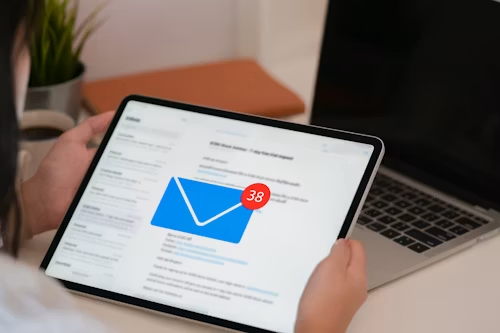
Most of us signed up for our main email account years ago, often as teenagers, without giving it a second thought. It became the account everything else gets tied to: online shopping, banking alerts, doctor’s appointments, the school newsletter, old job applications, and a decade or more of conversations we have long forgotten about. Over time, that single inbox quietly turns into one of the most detailed records of our lives that exists anywhere.
With data breaches making headlines on a fairly regular basis, it’s worth taking a closer look at what is actually happening behind the scenes of your inbox, and what you can do about it.
What your inbox actually knows about you
Open your sent folder and have a scroll back through the last few years. Chances are you’ll find bank statements, passport scans sent to travel agents, medical results, payslips and probably a password or two that someone emailed you “temporarily” and you never got round to changing. None of this feels dangerous in isolation, but together it builds a fairly complete profile of who you are, where you live, what you earn and who you know.
If that account were ever compromised, whoever gained access would not just see your messages. They could use the “forgot password” link on almost every other account you own, since email is the recovery method for nearly everything. That is why securing your inbox is arguably one of the most important aspects of cybersecurity.
How a private email account can protect your digital life
Switching to a more private email provider does not mean abandoning the account you already use for everything. Many people keep their old address for low-stakes signups and newsletters, while moving anything sensitive, banking, healthcare, family conversations, over to an account built around encryption and minimal data collection. The main benefit is that messages are scrambled in a way that even the provider itself cannot read, so there is nothing useful to hand over even if the company were compelled to.
It sounds like a big change, but in practice it is closer to switching banks than rebuilding your digital life. You forward a few important contacts, update your most-used logins gradually, and let the old account fade into the background over a few weeks.
Another often-overlooked advantage of using a private email account is the reduction in data tracking. Many mainstream email services analyse metadata or use information about your activity to personalise advertising or improve their services. Privacy-focused providers are typically designed with a different philosophy: collecting as little information as possible and giving users greater control over their personal data. While no online service can eliminate every privacy risk, choosing a provider that limits data collection significantly reduces the amount of information that exists about you in the first place.
The Information Commissioner’s Office, the UK’s independent body for data protection, has published practical guidance on protecting your personal information online, and it is worth ten minutes of anyone’s time, regardless of how tech-savvy they consider themselves.
Making privacy part of your everyday routine
None of this needs to feel like a chore or a sudden overhaul. Treat it more like a slow spring clean: tackle one account a week, start with whichever services hold your most sensitive information, and build better habits as you go. Within a couple of months, your digital footprint will look very different, and considerably harder for anyone to exploit.
Protecting your digital life is not about becoming paranoid or disconnecting from the internet altogether. It is simply about being a little more deliberate with the accounts that matter most, starting with the one that almost everything else depends on.
